
Introduction
In modern hydraulic systems — from construction equipment and manufacturing automation to water treatment plants and aerospace testing rigs — pressure is one of the most critical parameters to monitor and control. A pressure switch serves as the frontline sentinel, detecting when pressure crosses a predefined threshold and triggering a response to protect equipment, optimize performance, or alert operators.
For decades, hydraulic engineers and maintenance professionals relied almost exclusively on analog (mechanical) pressure switches. These time-tested devices use a physical spring-loaded mechanism to open or close an electrical contact at a set pressure point. They are simple, rugged, and inexpensive — qualities that have kept them relevant for generations.
However, the industrial landscape is evolving rapidly. The rise of Industry 4.0, smart factories, predictive maintenance, and IoT-enabled monitoring has created demand for pressure switches that offer more than a simple on/off signal. Digital pressure switches — equipped with electronic sensors, microprocessors, LCD/OLED displays, and digital communication protocols — are increasingly being adopted across hydraulic applications.
So the question is: should your organization stick with proven analog pressure switches, or make the transition to digital? This article provides a comprehensive, unbiased comparison of analog and digital pressure switches for modern hydraulic systems, helping you make an informed decision based on your specific application requirements.
1. What Are Analog Pressure Switches?
Operating Principle
An analog pressure switch — often called a mechanical pressure switch — operates on a fundamental physical principle. A sensing element (typically a Bourdon tube, diaphragm, or bellows) deforms under pressure. This mechanical deformation is transferred to a spring-loaded mechanism that actuates an electrical contact at a predetermined set point. When pressure rises above the set point, the contact opens or closes, triggering a relay, alarm, or pump shutdown.
No microprocessor. No digital display. No communication protocol. Just pure mechanical force balancing against a calibrated spring. This simplicity is both its greatest strength and its fundamental limitation.
Key Advantages
Notable Limitations
2. What Are Digital Pressure Switches?
Operating Principle
A digital pressure switch replaces the mechanical sensing element with an electronic pressure sensor — typically a MEMS (Micro-Electro-Mechanical Systems) or piezoresistive silicon sensor. This sensor converts pressure into an analog electrical signal, which is then digitized by an onboard analog-to-digital converter (ADC) and processed by a microcontroller.
The microcontroller performs real-time calculations, applies temperature compensation and linearization algorithms, and determines whether the measured pressure has crossed a user-defined threshold. When it has, the switch triggers a solid-state output (relay, transistor, or optocoupler) — all within microseconds.
Key Advantages
Considerations
3. Head-to-Head Comparison
3.1 Performance Comparison
| Parameter | Analog Pressure Switch | Digital Pressure Switch |
|---|---|---|
| Accuracy | ±2% to ±5% FS | ±0.25% to ±0.5% FS |
| Set Point Adjustment | Manual (screw/dial) | Digital (buttons/remote) |
| Display | None | LCD / OLED |
| Output Signal | Binary (relay/SPDT) | Binary + Analog + Digital (4-20mA, RS485, IO-Link) |
| Response Time | 10-50 ms (mechanical) | < 1 ms (electronic) |
| Switching Life | ~100,000 cycles | ~1,000,000+ cycles |
| Temperature Compensation | No (drift with temp.) | Yes (built-in sensor) |
| Data Logging | Not possible | Built-in or via PLC |
| Diagnostics | None | Self-diagnosis, fault codes |
3.2 Application Suitability Matrix
| Application Scenario | Recommended Type | Reason |
|---|---|---|
| Basic pump protection (on/off) | Analog | Cost-effective, proven reliability |
| Precision hydraulic press control | Digital | Tight pressure tolerance required |
| Explosion-proof zone (ATEX) | Analog (intrinsic safety) | No electrical power needed |
| IoT-enabled remote monitoring | Digital | Requires digital communication |
| High-vibration environment (excavator) | Digital (ruggedized) | No contact wear, vibration resistant |
| Safety interlock (backup protection) | Analog | Simple, fail-safe, independent |
3.3 Total Cost of Ownership (TCO) Analysis
While the upfront cost of a digital pressure switch may be 3x to 8x higher than an analog unit, the total cost of ownership tells a different story — especially in large-scale or mission-critical installations:
4. Industry Trends and Future Outlook
The pressure switch market is undergoing a significant transformation. While analog pressure switches will continue to serve cost-sensitive and safety-critical applications for the foreseeable future, the growth trajectory clearly favors digital solutions. Several key trends are driving this shift:
Industry analysts project that the digital pressure switch segment will grow at a CAGR of approximately 8-10% through 2030, significantly outpacing the modest growth of the analog segment.
5. MEOKON’s Digital Pressure Switch Solutions
At MEOKON, we understand that selecting the right pressure switch is not a one-size-fits-all decision. That is why we offer a comprehensive portfolio of both analog and digital pressure switches, engineered to meet the diverse demands of modern hydraulic systems worldwide.
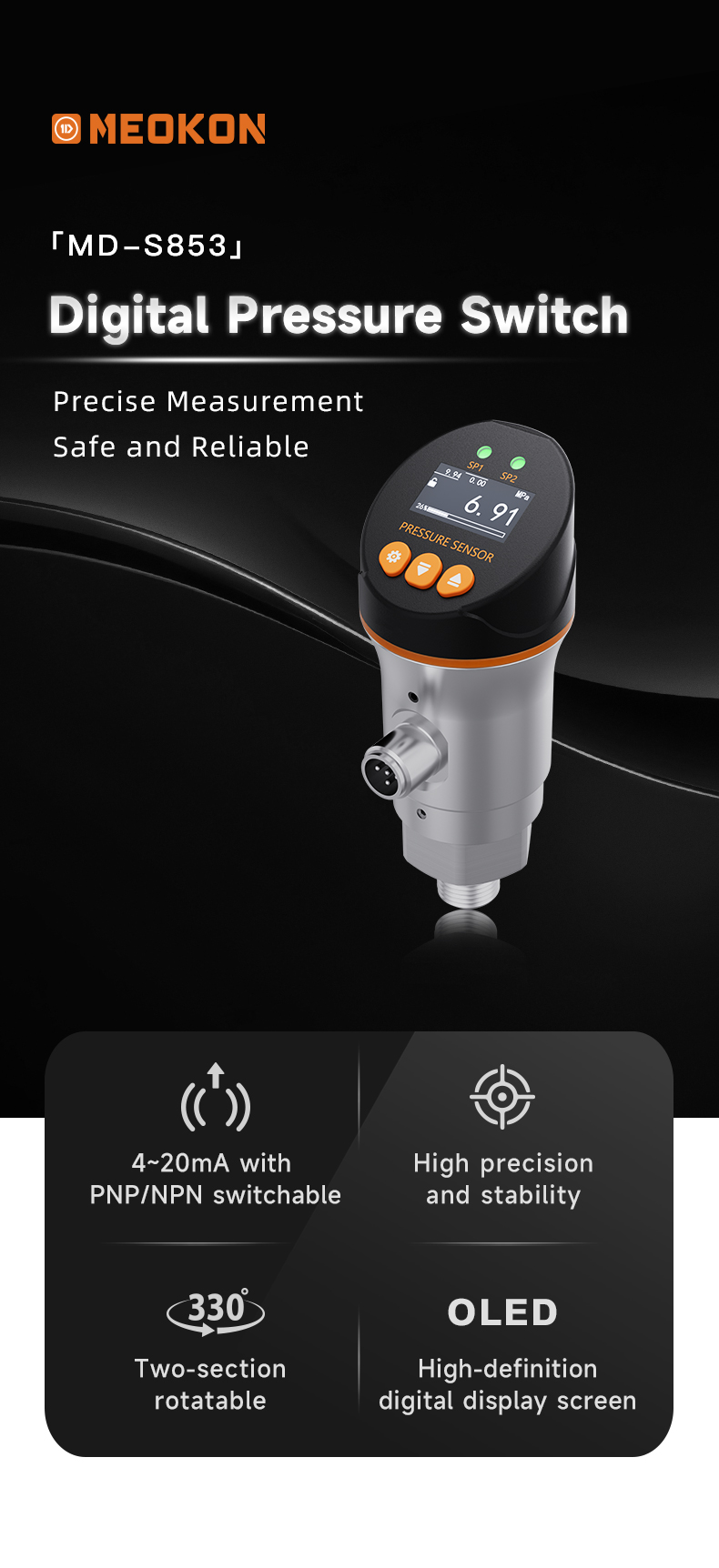
MD-S853 Series — Digital Pressure Switch
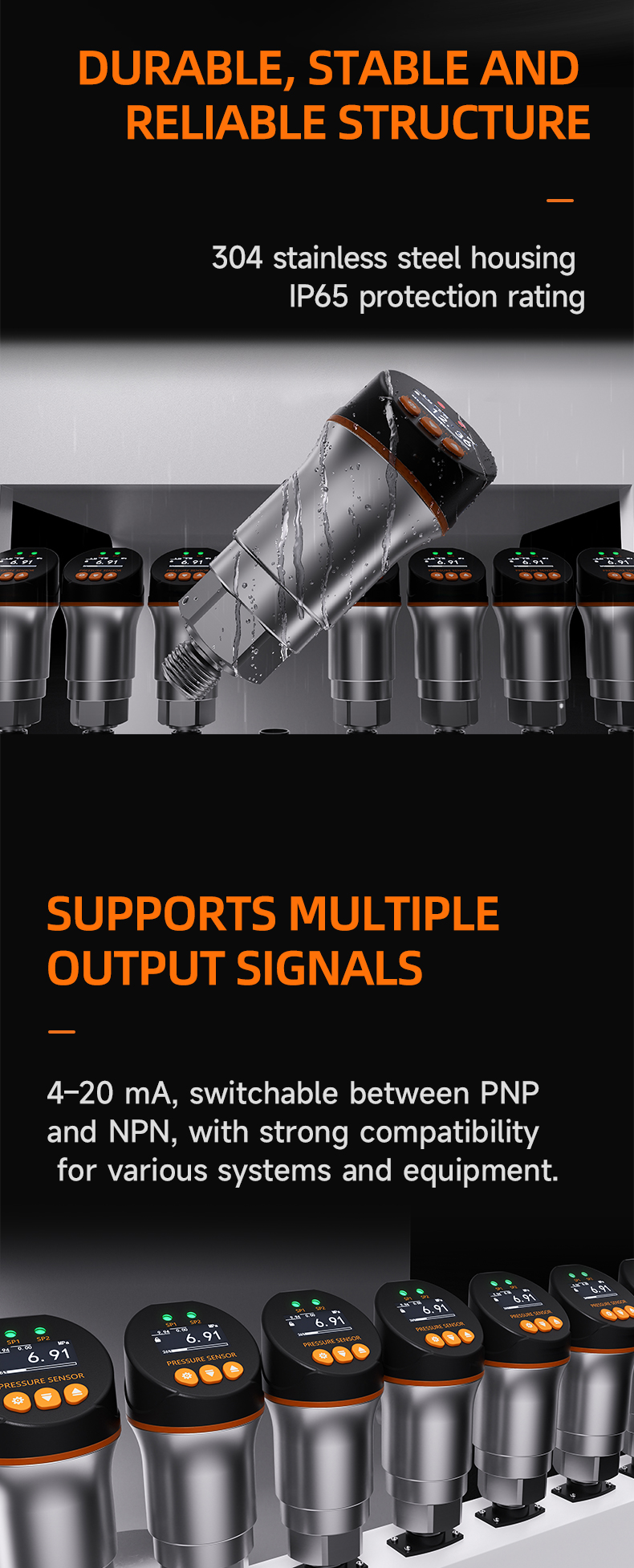
The MD-S853 is MEOKON’s flagship digital pressure switch, purpose-built for hydraulic systems that demand precision, reliability, and smart functionality. Key features include:
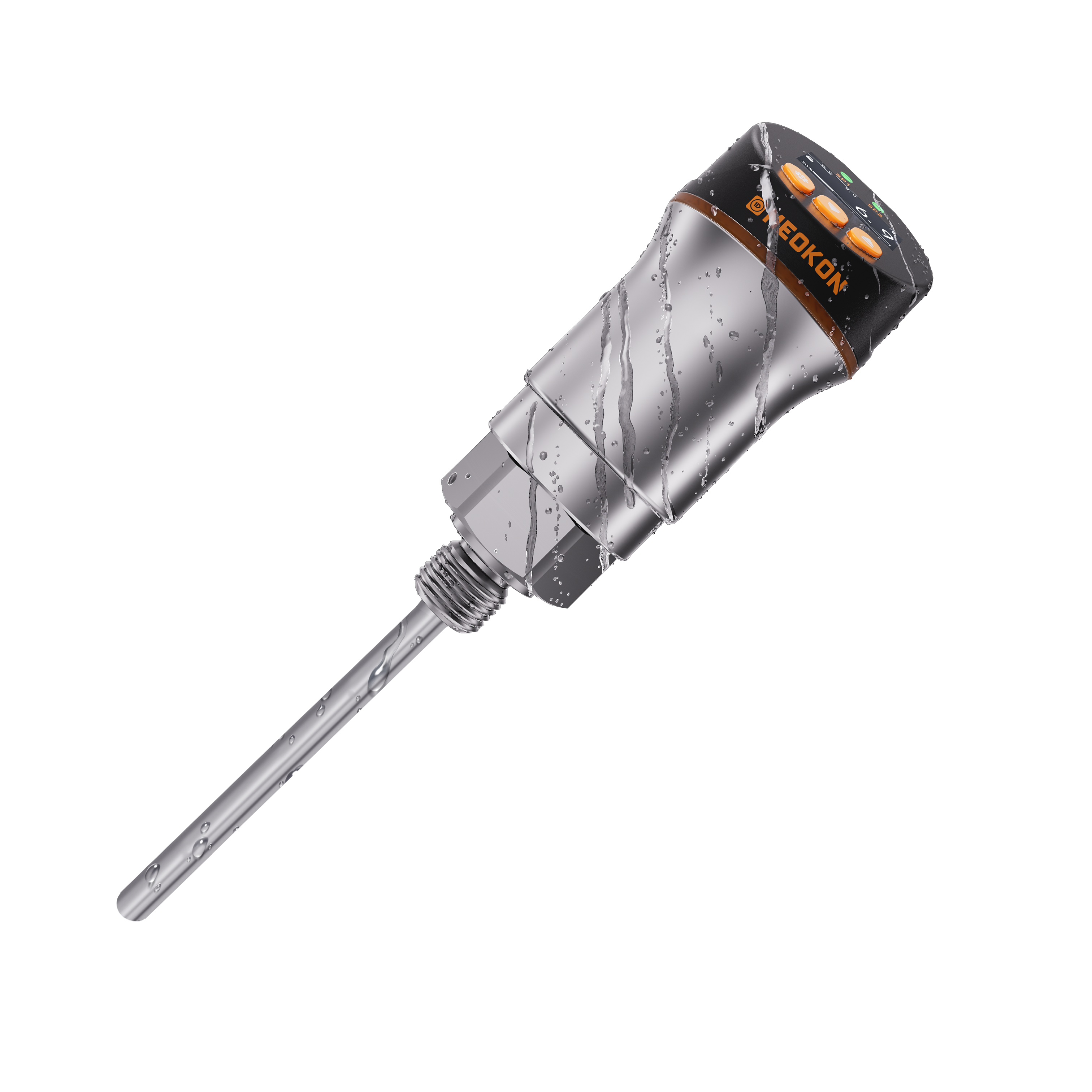
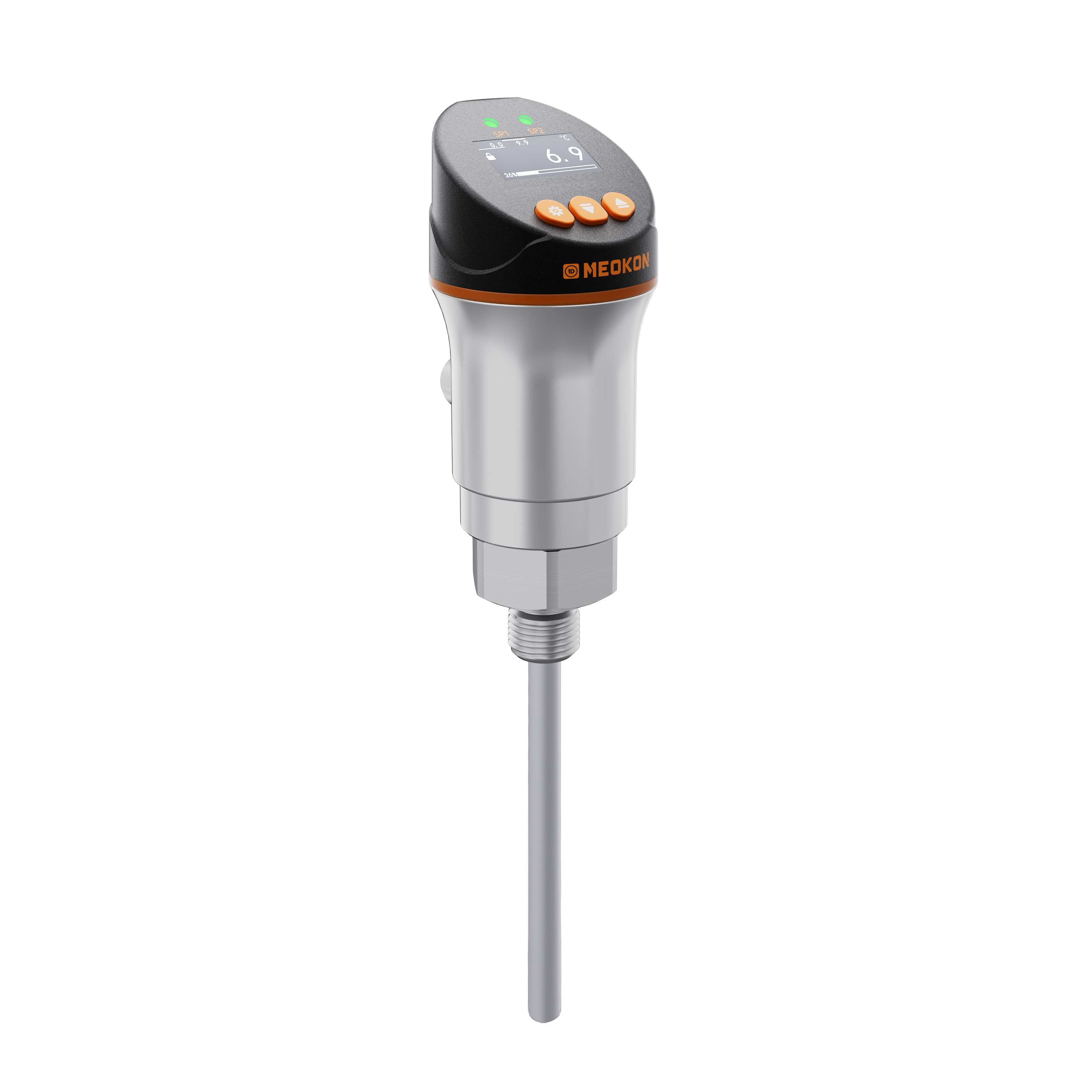
MD-S853T — Hydraulic Digital Pressure Switch Sensor
The MD-S853T is a compact, high-performance digital pressure switch sensor designed specifically for hydraulic machinery, including excavators, mobile equipment, and industrial hydraulic power units. It combines MEMS-based sensing with robust signal conditioning to deliver reliable performance in the most demanding mobile hydraulic environments.
Why Choose MEOKON?
6. Making the Right Choice: Decision Framework
Choosing between analog and digital pressure switches should be based on a systematic evaluation of your application requirements. Use the following decision framework:
Choose Analog If:
Choose Digital If:
In many real-world hydraulic systems, the optimal solution is a hybrid approach: digital pressure switches for primary process monitoring and control, complemented by analog switches as independent safety backups. This layered strategy ensures both precision and fail-safe protection.
Conclusion
The debate between analog and digital pressure switches is not about which technology is universally superior — it is about matching the right tool to the right application. Analog pressure switches remain the workhorse of basic pressure protection, offering unmatched simplicity, ruggedness, and cost efficiency. Digital pressure switches, on the other hand, represent the future of intelligent pressure management, delivering precision, connectivity, and insight that analog devices simply cannot provide.
As hydraulic systems become increasingly sophisticated — driven by automation, electrification, and digitalization — the demand for smart pressure monitoring will only accelerate. Organizations that invest in digital pressure switching technology today position themselves for greater operational efficiency, reduced maintenance costs, and enhanced safety in the years ahead.
At MEOKON, we are committed to providing pressure monitoring solutions that match your exact needs — whether that means a proven analog switch for a straightforward application or a feature-rich digital switch for a mission-critical hydraulic system. Our expert engineering team is ready to help you select the optimal solution for your application.
Ready to Upgrade Your Hydraulic Pressure Monitoring?
Contact MEOKON today to discuss your pressure switch requirements. Our team will help you select the right product from our MD-S853 digital pressure switch series or recommend an analog solution if that better suits your needs. Free samples and OEM/ODM services are available.
Post time: Aug-05-2026